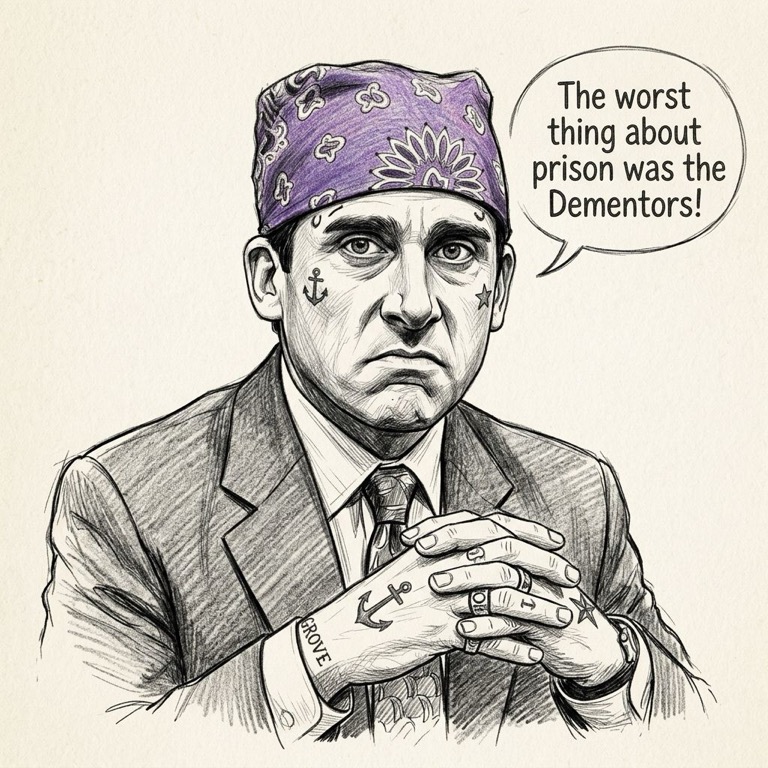
¿Mi jefe es básicamente Michael Scott?
Un test rápido para detectar banderas rojas de gestión.
Si buscaste «¿mi jefe me odia?» o «¿mi jefe es abusivo?», estás en el sitio correcto: este es el test gratuito para saber si tu jefe es tóxico.
10 escenarios laborales, transiciones rápidas y reacciones de Michael Scott después de cada respuesta. Con teclado, presiona 1, 2, o 3 para responder al instante, y ← → o Enter para moverte entre preguntas.
¿Eres manager? Hacer el test de manager →
Preguntas que la gente hace antes de empezar
Is my boss toxic?
A hard week is not the same thing as a toxic boss. The signal is a pattern that keeps showing up: criticism in front of other people, credit that moves upward, goals that change after you hit them, or a cost when you push back. This quiz is not a diagnosis. It is a way to name the last few months. Take the free quiz on this page.
Does my boss hate me?
It can feel personal when a manager is cold, short, or unfair. You cannot see motive from one tense meeting, and guessing at hate usually makes the week heavier. What you can check is behavior: feedback in private or blame in public, credit shared or credit taken, time off respected or treated as disloyalty. Take the free quiz on this page.
Is my boss abusive?
That is a serious question, and this quiz is not a legal finding. It can show whether humiliation, control, or retaliation is repeating. If you are being threatened, harmed, or punished for speaking up, contact HR if that is safe, or a legal aid or support resource where you live. This page does not give legal advice. When you want a plain read on the pattern, take the free quiz on this page.
How do I know if my boss is toxic?
Toxic bosses share a pattern of behaviors: public criticism, credit theft, shifting expectations, micromanagement, and retaliation for honest feedback. A single bad day is normal; a consistent pattern across months is the real signal. This quiz walks you through 10 common workplace scenarios to help you separate friction from a genuine red flag.
Is my boss just stressed or actually toxic?
Stressed managers still apologize, self-correct, and protect their team. Toxic managers externalize blame, withhold information, and escalate pressure downward. If you feel worse after most interactions with your manager — not the work — that's the tell.
Should I quit if my boss is toxic?
Quitting isn't always the right first move, but staying silent almost never helps. Start by documenting incidents, establishing a support network, and quietly exploring the job market. If your manager's behavior is affecting your health, relationships, or self-worth, leaving is a legitimate and often necessary choice.
Do I need to sign up to take this quiz?
No. The quiz is free and requires no account. At the end you'll see your result and can optionally subscribe to weekly job openings from companies that won't burn you out.
Metodología y puntuación
Cada escenario corresponde a una bandera roja documentada en investigación revisada por pares o grandes encuestas laborales. Las fuentes a continuación formaron tanto los escenarios como los umbrales de puntuación.
Puntuación: Cada escenario se puntúa 0 para saludable, 1 para fricción ocasional, o 2 para un patrón persistente. Las puntuaciones totales van de 0 a 20.
Fuentes por escenario
- La emboscada del feedback — Zhao, Dunkailo, Clair & Boyd, "When Feedback Crosses the Line" (HBR, 2026). When Feedback Crosses the Line. 23% de 402 empleados reportaron humillación pública, y 78% recordaron feedback destructivo años después.
- El objetivo móvil — Tubre & Collins, "Role Ambiguity, Role Conflict, and Job Performance" (Journal of Management, 2000). Role Ambiguity, Role Conflict, and Job Performance. Metaanálisis muestra que la ambigüedad de rol predice fuertemente estrés, burnout y menor rendimiento.
- El ladrón de crédito — Chen, Li, Yang, Zhang & Hou, "The Idea Is Mine!" (Frontiers in Psychology, 2022). The Idea Is Mine!. En 418 pares líder-empleado, reclamar crédito desencadenó enojo y redujo el rendimiento laboral.
- La prueba de lealtad — Parker & Dinesh, "More than 4 in 10 U.S. workers don’t take all their paid time off" (Pew Research, 2023). More than 4 in 10 U.S. workers don’t take all their paid time off. 46% subutiliza vacaciones, y 21% teme pérdida de empleo por tomarlas.
- El círculo interno — Graen & Uhl-Bien, "Development of Leader-Member Exchange (LMX) Theory" (The Leadership Quarterly, 1995); Li, "Perceived Workplace Favoritism" (Central Michigan University, 2018). Perceived Workplace Favoritism. 47% de empleados reportó favoritismo, e incluso empleados favorecidos mostraron mayor agotamiento e intención de renuncia.
- El simulacro de incendio — Smith, "5 Tactics to Combat a Culture of False Urgency at Work" (HBR, 2023). 5 Tactics to Combat a Culture of False Urgency at Work. La urgencia falsa mata el trabajo profundo y empuja al burnout; el multitasking de cultura de urgencia puede reducir dramáticamente la productividad.
- La trampa de información — Jiang, "Why Withholding Information at Work Won’t Give You an Advantage" (HBR, 2019). Why Withholding Information at Work Won’t Give You an Advantage. Los ocultadores de conocimiento prosperan menos, y compartir información mal es costoso a escala.
- La zona gris ética — Kish-Gephart, Harrison & Trevino, "Bad Apples, Bad Cases, and Bad Barrels" (Journal of Applied Psychology, 2010). Bad Apples, Bad Cases, and Bad Barrels. La presión organizacional impulsa decisiones no éticas más que el carácter individual en el metaanálisis.
- El micromanager — Zak, "The Neuroscience of Trust" (HBR, 2017). The Neuroscience of Trust. Las empresas de alta confianza ven menos estrés, más energía y mayor productividad. La autonomía es el antídoto al micromanagement.
- El drenaje lento — Salvagioni et al., "Physical, psychological and occupational consequences of job burnout" (PLoS ONE, 2017). Physical, psychological and occupational consequences of job burnout. El burnout predice enfermedad cardiovascular, depresión, insomnio y riesgo elevado de mortalidad.
Encuestas de referencia
- Gallup, State of the Global Workplace (2024) — Los managers representan el 70% de la varianza en el compromiso del empleado, y la mitad de todos los empleados han renunciado a un trabajo por un manager.
- SHRM Workplace Survey (2020) — 84% de trabajadores de EE.UU. dicen que managers mal entrenados crean estrés innecesario.