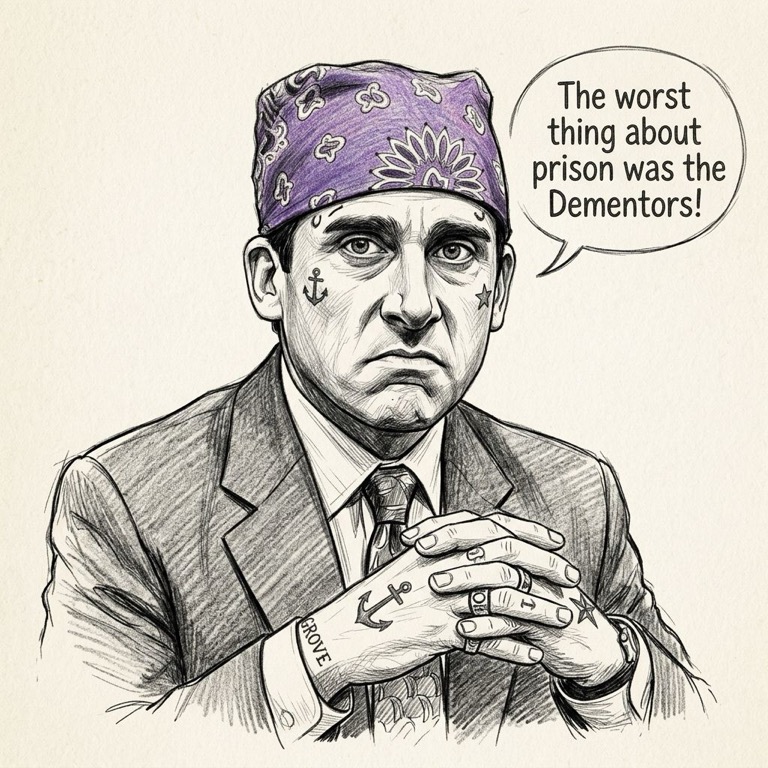
Șeful meu e literalmente Michael Scott?
Un chestionar rapid pentru detectarea red flags de management.
Dacă ai căutat „mă urăște șeful meu” sau „șeful meu e abuziv”, ești unde trebuie: acesta e chestionarul gratuit despre un șef toxic.
10 scenarii de job, tranziții rapide și reacții de la Michael Scott după fiecare răspuns. Cu tastatura, apasă 1, 2 sau 3 ca să răspunzi imediat, iar ← → sau Enter ca să treci între întrebări.
Ești manager? Ia chestionarul de manager →
Întrebări pe care lumea le pune înainte să înceapă
Is my boss toxic?
A hard week is not the same thing as a toxic boss. The signal is a pattern that keeps showing up: criticism in front of other people, credit that moves upward, goals that change after you hit them, or a cost when you push back. This quiz is not a diagnosis. It is a way to name the last few months. Take the free quiz on this page.
Does my boss hate me?
It can feel personal when a manager is cold, short, or unfair. You cannot see motive from one tense meeting, and guessing at hate usually makes the week heavier. What you can check is behavior: feedback in private or blame in public, credit shared or credit taken, time off respected or treated as disloyalty. Take the free quiz on this page.
Is my boss abusive?
That is a serious question, and this quiz is not a legal finding. It can show whether humiliation, control, or retaliation is repeating. If you are being threatened, harmed, or punished for speaking up, contact HR if that is safe, or a legal aid or support resource where you live. This page does not give legal advice. When you want a plain read on the pattern, take the free quiz on this page.
How do I know if my boss is toxic?
Toxic bosses share a pattern of behaviors: public criticism, credit theft, shifting expectations, micromanagement, and retaliation for honest feedback. A single bad day is normal; a consistent pattern across months is the real signal. This quiz walks you through 10 common workplace scenarios to help you separate friction from a genuine red flag.
Is my boss just stressed or actually toxic?
Stressed managers still apologize, self-correct, and protect their team. Toxic managers externalize blame, withhold information, and escalate pressure downward. If you feel worse after most interactions with your manager — not the work — that's the tell.
Should I quit if my boss is toxic?
Quitting isn't always the right first move, but staying silent almost never helps. Start by documenting incidents, establishing a support network, and quietly exploring the job market. If your manager's behavior is affecting your health, relationships, or self-worth, leaving is a legitimate and often necessary choice.
Do I need to sign up to take this quiz?
No. The quiz is free and requires no account. At the end you'll see your result and can optionally subscribe to weekly job openings from companies that won't burn you out.
Metodologie și punctaj
Fiecare scenariu corespunde unui red flag documentat în cercetare peer-reviewed sau sondaje mari de muncă. Sursele de mai jos au format atât scenariile cât și pragurile de punctaj.
Punctaj: Fiecare scenariu e punctat 0 pentru sănătos, 1 pentru fricțiune ocazională sau 2 pentru un pattern persistent. Punctajele totale variază de la 0 la 20.
Surse pe scenariu
- Ambuscada de feedback — Zhao, Dunkailo, Clair & Boyd, "When Feedback Crosses the Line" (HBR, 2026). When Feedback Crosses the Line. 23% din 402 angajați au raportat umilință publică, iar 78% își aminteau de feedback distructiv ani mai târziu.
- Ținta mobilă — Tubre & Collins, "Role Ambiguity, Role Conflict, and Job Performance" (Journal of Management, 2000). Role Ambiguity, Role Conflict, and Job Performance. Meta-analiza arată că ambiguitatea rolului prezice puternic stress, burnout și performanță redusă.
- Hoțul de credit — Chen, Li, Yang, Zhang & Hou, "The Idea Is Mine!" (Frontiers in Psychology, 2022). The Idea Is Mine!. În 418 perechi lider-angajat, revendicarea creditului a declanșat furie și a redus performanța la job.
- Testul de loialitate — Parker & Dinesh, "More than 4 in 10 U.S. workers don’t take all their paid time off" (Pew Research, 2023). More than 4 in 10 U.S. workers don’t take all their paid time off. 46% subutilizează concediul, iar 21% se tem de pierderea jobului pentru că îl iau.
- Cercul interior — Graen & Uhl-Bien, "Development of Leader-Member Exchange (LMX) Theory" (The Leadership Quarterly, 1995); Li, "Perceived Workplace Favoritism" (Central Michigan University, 2018). Perceived Workplace Favoritism. 47% din angajați au raportat favoritisme, iar chiar angajații favorizați au arătat epuizare mai mare și intenție de demisie.
- Simulacrul de incendiu — Smith, "5 Tactics to Combat a Culture of False Urgency at Work" (HBR, 2023). 5 Tactics to Combat a Culture of False Urgency at Work. Urgența falsă ucide munca profundă și împinge către burnout; multitasking-ul culturii de urgență poate reduce dramatic productivitatea.
- Capcana de informații — Jiang, "Why Withholding Information at Work Won’t Give You an Advantage" (HBR, 2019). Why Withholding Information at Work Won’t Give You an Advantage. Ascunzătorii de cunoștințe prosperă mai puțin, iar distribuirea proastă a informațiilor costă scump la scară.
- Zona gri etică — Kish-Gephart, Harrison & Trevino, "Bad Apples, Bad Cases, and Bad Barrels" (Journal of Applied Psychology, 2010). Bad Apples, Bad Cases, and Bad Barrels. Presiunea organizațională conduce la decizii neetice mai mult decât caracterul individual în meta-analiză.
- Micromanagerul — Zak, "The Neuroscience of Trust" (HBR, 2017). The Neuroscience of Trust. Companiile cu încredere mare văd mai puțin stress, mai multă energie și mai multă productivitate. Autonomia e antidotul la micromanagement.
- Drenajul lent — Salvagioni et al., "Physical, psychological and occupational consequences of job burnout" (PLoS ONE, 2017). Physical, psychological and occupational consequences of job burnout. Burnout-ul prezice boli cardiovasculare, depresie, insomnie și risc crescut de mortalitate.
Sondaje de referință
- Gallup, State of the Global Workplace (2024) — Managerii reprezintă 70% din variația în angajamentul angajatului, iar jumătate din toți angajații au plecat de la un job din cauza unui manager.
- SHRM Workplace Survey (2020) — 84% din lucrătorii din SUA spun că managerii slab instruiți creează stress inutil.