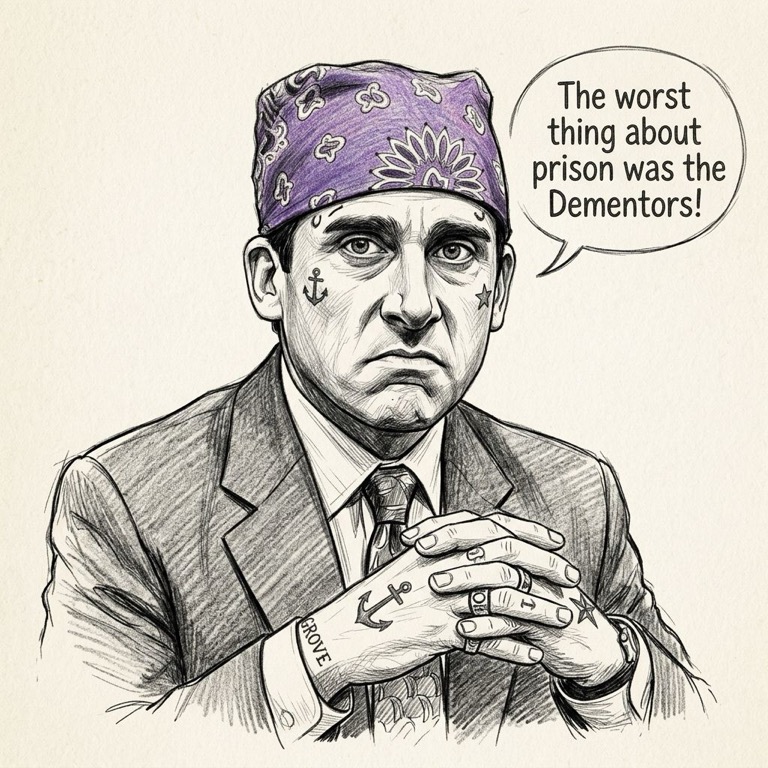
O meu chefe é literalmente o Michael Scott?
Um questionário rápido para detetar red flags de gestão.
Se pesquisaste «o meu chefe odeia-me» ou «o meu chefe é abusivo», estás no sítio certo: este é o questionário gratuito para perceber se o chefe é tóxico.
10 cenários de trabalho, transições rápidas e reações de Michael Scott após cada resposta. Com teclado, carrega em 1, 2 ou 3 para responder de imediato, e ← → ou Enter para avançar entre perguntas.
És gestor? Fazer o questionário de gestor →
Perguntas que as pessoas fazem antes de começar
Is my boss toxic?
A hard week is not the same thing as a toxic boss. The signal is a pattern that keeps showing up: criticism in front of other people, credit that moves upward, goals that change after you hit them, or a cost when you push back. This quiz is not a diagnosis. It is a way to name the last few months. Take the free quiz on this page.
Does my boss hate me?
It can feel personal when a manager is cold, short, or unfair. You cannot see motive from one tense meeting, and guessing at hate usually makes the week heavier. What you can check is behavior: feedback in private or blame in public, credit shared or credit taken, time off respected or treated as disloyalty. Take the free quiz on this page.
Is my boss abusive?
That is a serious question, and this quiz is not a legal finding. It can show whether humiliation, control, or retaliation is repeating. If you are being threatened, harmed, or punished for speaking up, contact HR if that is safe, or a legal aid or support resource where you live. This page does not give legal advice. When you want a plain read on the pattern, take the free quiz on this page.
How do I know if my boss is toxic?
Toxic bosses share a pattern of behaviors: public criticism, credit theft, shifting expectations, micromanagement, and retaliation for honest feedback. A single bad day is normal; a consistent pattern across months is the real signal. This quiz walks you through 10 common workplace scenarios to help you separate friction from a genuine red flag.
Is my boss just stressed or actually toxic?
Stressed managers still apologize, self-correct, and protect their team. Toxic managers externalize blame, withhold information, and escalate pressure downward. If you feel worse after most interactions with your manager — not the work — that's the tell.
Should I quit if my boss is toxic?
Quitting isn't always the right first move, but staying silent almost never helps. Start by documenting incidents, establishing a support network, and quietly exploring the job market. If your manager's behavior is affecting your health, relationships, or self-worth, leaving is a legitimate and often necessary choice.
Do I need to sign up to take this quiz?
No. The quiz is free and requires no account. At the end you'll see your result and can optionally subscribe to weekly job openings from companies that won't burn you out.
Metodologia e pontuação
Cada cenário corresponde a uma red flag documentada em investigação revista por pares ou grandes inquéritos laborais. As fontes abaixo formaram tanto os cenários como os limiares de pontuação.
Pontuação: Cada cenário é pontuado 0 para saudável, 1 para fricção ocasional, ou 2 para um padrão persistente. As pontuações totais vão de 0 a 20.
Fontes por cenário
- A emboscada de feedback — Zhao, Dunkailo, Clair & Boyd, "When Feedback Crosses the Line" (HBR, 2026). When Feedback Crosses the Line. 23% de 402 funcionários relataram humilhação pública, e 78% lembravam-se de feedback destrutivo anos depois.
- O alvo móvel — Tubre & Collins, "Role Ambiguity, Role Conflict, and Job Performance" (Journal of Management, 2000). Role Ambiguity, Role Conflict, and Job Performance. Meta-análise mostra que a ambiguidade de papel prevê fortemente stress, burnout e desempenho reduzido.
- O ladrão de crédito — Chen, Li, Yang, Zhang & Hou, "The Idea Is Mine!" (Frontiers in Psychology, 2022). The Idea Is Mine!. Em 418 pares líder-funcionário, reivindicar crédito desencadeou raiva e reduziu o desempenho no trabalho.
- O teste de lealdade — Parker & Dinesh, "More than 4 in 10 U.S. workers don’t take all their paid time off" (Pew Research, 2023). More than 4 in 10 U.S. workers don’t take all their paid time off. 46% subutilizam férias, e 21% temem perda de emprego por tirá-las.
- O círculo interno — Graen & Uhl-Bien, "Development of Leader-Member Exchange (LMX) Theory" (The Leadership Quarterly, 1995); Li, "Perceived Workplace Favoritism" (Central Michigan University, 2018). Perceived Workplace Favoritism. 47% dos funcionários relatou favoritismo, e até funcionários favorecidos mostraram maior esgotamento e intenção de demissão.
- O simulacro de incêndio — Smith, "5 Tactics to Combat a Culture of False Urgency at Work" (HBR, 2023). 5 Tactics to Combat a Culture of False Urgency at Work. A urgência falsa mata o trabalho profundo e empurra para o burnout; o multitarefa de cultura de urgência pode reduzir dramaticamente a produtividade.
- A armadilha de informação — Jiang, "Why Withholding Information at Work Won’t Give You an Advantage" (HBR, 2019). Why Withholding Information at Work Won’t Give You an Advantage. Os ocultadores de conhecimento prosperam menos, e partilhar informação mal é caro em escala.
- A zona cinzenta ética — Kish-Gephart, Harrison & Trevino, "Bad Apples, Bad Cases, and Bad Barrels" (Journal of Applied Psychology, 2010). Bad Apples, Bad Cases, and Bad Barrels. A pressão organizacional impulsiona decisões não éticas mais do que o caráter individual na meta-análise.
- O microgestor — Zak, "The Neuroscience of Trust" (HBR, 2017). The Neuroscience of Trust. As empresas de alta confiança veem menos stress, mais energia e maior produtividade. A autonomia é o antídoto para a microgestão.
- O dreno lento — Salvagioni et al., "Physical, psychological and occupational consequences of job burnout" (PLoS ONE, 2017). Physical, psychological and occupational consequences of job burnout. O burnout prevê doença cardiovascular, depressão, insónia e risco elevado de mortalidade.
Inquéritos de referência
- Gallup, State of the Global Workplace (2024) — Os gestores representam 70% da variância no compromisso do funcionário, e metade de todos os funcionários deixaram um emprego por causa de um gestor.
- SHRM Workplace Survey (2020) — 84% dos trabalhadores dos EUA dizem que gestores mal treinados criam stress desnecessário.