ADHD and Job Hopping: Why It Happens and How to Manage It
If you keep cycling through jobs after strong starts, it may not be a commitment problem. ADHD and job hopping often overlap for real reasons, and there are practical ways to create more stability.
ADHD and Job Hopping: Why It Happens and How to Manage It
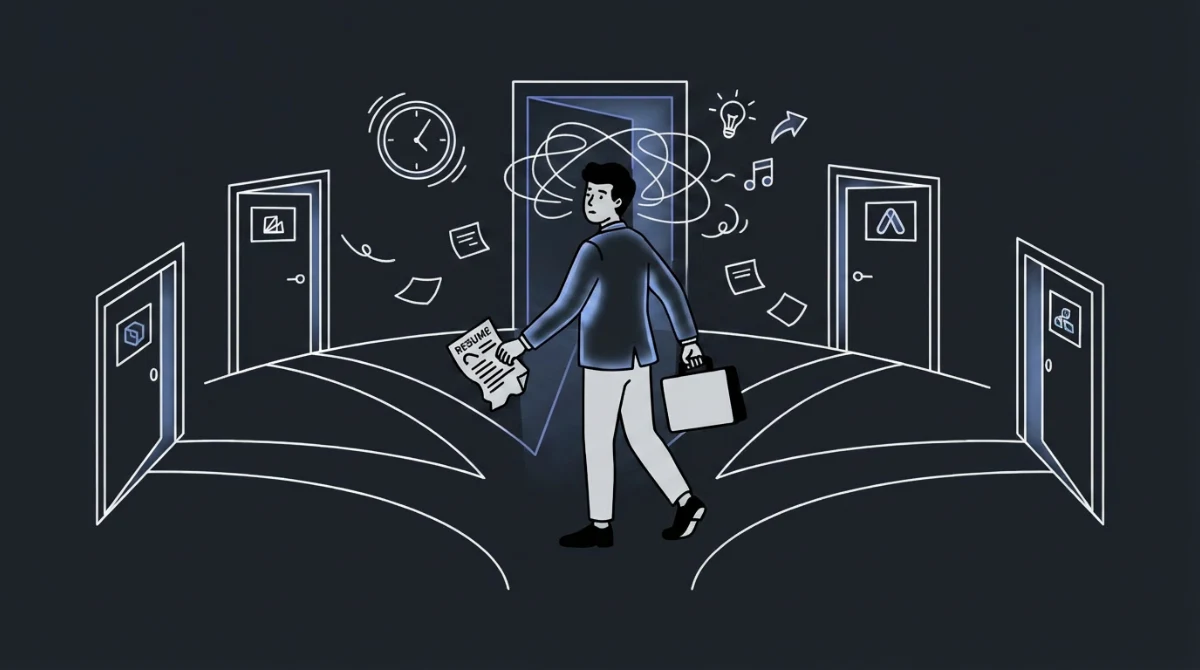
ADHD and job hopping often overlap, but not everyone with ADHD will bounce from role to role. Novelty seeking, executive dysfunction, rejection sensitivity, and poor job fit can make staying much harder than it looks. If you keep leaving jobs after strong starts, there is a pattern worth understanding instead of another round of self-blame.
If you want calm, useful career advice without the noise, sign up for the Calm Companies newsletter. You will get practical job search tips, healthier work insights, and updates you can actually use.
It also helps to zoom out before turning this into a character judgment. If you are trying to tell the difference between a reasonable exit and a repeating pattern, start by asking is job hopping bad? That question can reduce shame and help you make better decisions.
ADHD and job hopping: why it happens
ADHD affects motivation, attention regulation, task initiation, working memory, and emotional regulation. In the right job, those traits may be manageable or even strengths. In the wrong job, they create a cycle of friction that makes leaving feel like relief.
Strong starts, hard middles
Many people with ADHD do very well at the start of a job. New roles bring novelty, urgency, learning, and clear short-term goals, all of which make focus easier. The harder stretch starts later, when the work becomes routine, structure fades, and self-management matters more than adrenaline.
Shame, feedback, and the urge to escape
When tasks pile up, ADHD makes it harder to restart, prioritize, or recover after a miss. That often leads to shame, which makes work even harder to face. Once someone starts feeling behind, exposed, or constantly corrected, quitting can feel less like a choice and more like an exit from pressure.
- Novelty feels energizing. A new role brings urgency, learning, and visible progress, which often makes attention easier to direct.
- Once the learning curve fades, routine tasks require far more effort than others realize. That drop in stimulation can look like lost interest, even when you still care.
- Executive dysfunction makes planning, prioritizing, and follow-through harder. Missed details and mounting admin turn small struggles into a desire to escape.
- Rejection sensitivity can make ordinary feedback feel bigger than it is. After a few hard weeks, leaving may seem safer than staying visible.
- Some workplaces run on constant context switching, vague expectations, and performative busyness. That drains anyone, but it hits people with ADHD especially hard.
This is why some people with ADHD interview well, ramp quickly, and still struggle to stay steady. The problem is not necessarily capability. It is often the mismatch between how the brain works and how the job is structured.
The part most people miss: job design and ADHD
Most conversations about ADHD focus on personal habits, but job design is a huge part of the story. A role with clear priorities, visible deadlines, and meaningful variety can feel sustainable. A role with vague goals, nonstop meetings, and constant interruptions can feel impossible.
Chaos can imitate lack of motivation
If you are always exhausted, behind, or emotionally flat, the issue may not be motivation at all. It may be a pileup of overworked symptoms that turns normal work into survival mode.
Age and career stage add another layer. Early-career workers already face weaker training, higher costs, and looser loyalty norms, which helps explain why Gen Z job hops more. If you are younger and have ADHD, those pressures stack fast.
This matters because not every exit is avoidance. Sometimes people are reacting to jobs that are under-supported, chaotic, or badly managed. If every role pushes you into the same overload pattern, the answer may be better fit and better systems, not just more willpower.
How to manage ADHD at work without forcing yourself to stay miserable
The goal is not to trap yourself in a bad job to prove you can stay. The goal is to understand your pattern, reduce impulsive exits, and build a work setup that gives you a real chance to succeed.
- Map your exits. Write down the last three to five jobs: when your motivation dropped, what tasks piled up, what support was missing, and what finally pushed you to leave. Patterns show up fast.
- Separate boredom from depletion. Boredom means the work is too flat or under-stimulating. Depletion means the workload, politics, or lack of structure is draining your basic functioning.
- Create a quit buffer. When you feel the urge to resign, give yourself 48 hours before acting unless there is a true safety issue. That pause is often enough to tell the difference between a bad week and a real mismatch.
- Ask for one change before you quit. A clearer check-in rhythm, written instructions, fewer meetings, task batching, or protected focus time can reshape the whole week.
- Externalize your systems. Use calendars, task boards, recurring reminders, templates, or shared notes so your job does not depend on memory alone.
- Choose jobs for operating conditions, not just title. The manager, workflow, workload, and level of ambiguity often matter more than whether the role sounds impressive.
Validate employers before final rounds
Check stability and workload indicators before you accept the offer.
A lot of job hopping slows down when people stop trying to copy someone else's work style. You may need more visible structure, more urgency, more recovery time, or more task variety. That is not a moral failure. It is useful information you can act on when choosing your next role.
Best jobs for ADHD: what to look for if you want more stability
If you want to stay longer, look for roles that reduce friction instead of multiplying it. The best fit is rarely the most glamorous option. It is the one that makes consistent performance easier.
- Clear priorities, so you are not guessing what matters most this week.
- A reasonable workload, so every day does not feel like catching up from behind.
- A mix of focus work and variety, instead of endless repetition or endless interruption.
- Written processes, meeting notes, and systems you can rely on when attention dips.
- Fast feedback loops, so you do not wait months to find out something is off.
- A manager who communicates clearly and does not confuse chaos with high performance.
- A culture that values results over constant online presence or performative busyness.
Interview for these conditions directly. Ask how priorities are set, how feedback is delivered, what happens when deadlines slip, and how much independent planning the role requires. Calm workplaces answer those questions clearly. Vague answers are often a warning sign.
When staying is useful, and when leaving is the right move
Sometimes the right move is staying long enough to test better systems, ask for support, and see whether the role becomes manageable. Other times, leaving is the healthy choice because the workload is unsustainable, the manager is chaotic, or the job punishes the very structure you need.
- Stay a little longer when the role has a real path to change, the environment is respectful, and your main issue is missing structure you can add.
- Plan an exit when the job is harming your health, expectations keep shifting, or you have already tried reasonable adjustments with no effect.
- Get outside support when every job follows the same pattern and you cannot tell whether the problem is fit, burnout, untreated symptoms, or all three.
Do not measure success only by tenure. A shorter stay in a healthy job can teach you more than years in a role built on panic. But if you are rebuilding your life from scratch every year, it is worth slowing down and getting more support around the pattern.
If you want more grounded career advice and updates on healthier workplaces, sign up for the Calm Companies newsletter. It is built for people who want better work, not more hustle.
FAQ
Why do people with ADHD change jobs so often?
Some people with ADHD are more affected by novelty seeking, executive dysfunction, boredom, overwhelm, or rejection sensitivity at work. When a job has weak structure, vague expectations, or constant interruptions, those traits can make staying much harder.
Is job hopping a symptom of ADHD?
Job hopping is not a formal symptom of ADHD, and it does not prove that someone has ADHD. But ADHD can make certain work conditions harder to tolerate, which increases the chances of frequent job changes.
Can people with ADHD keep a job long term?
Yes, many people with ADHD stay in jobs for years. Long-term stability usually improves when the role has clearer structure, better fit, manageable workload, and systems that reduce dependence on memory and self-control alone.
What kind of jobs are better for people with ADHD?
There is no single best job for ADHD, but many people do better in roles with clear priorities, visible deadlines, meaningful variety, and fast feedback. A supportive manager and a calm workflow often matter more than the job title itself.
How can I stop impulsively quitting jobs with ADHD?
Start by creating a pause between the urge to quit and the action of quitting. Track the patterns behind your exits, ask for one meaningful change before leaving, and build external systems that make work more manageable while you decide.
Get calm-company opportunities every week
Use the directory and subscribe so you can move fast when better roles open.