Anti Hustle Culture: Why More Companies Are Embracing Calm Work
Anti hustle culture is not about doing less. It is about working in a way people can sustain. Companies that embrace calm work keep talent longer, protect focus, and avoid burnout.
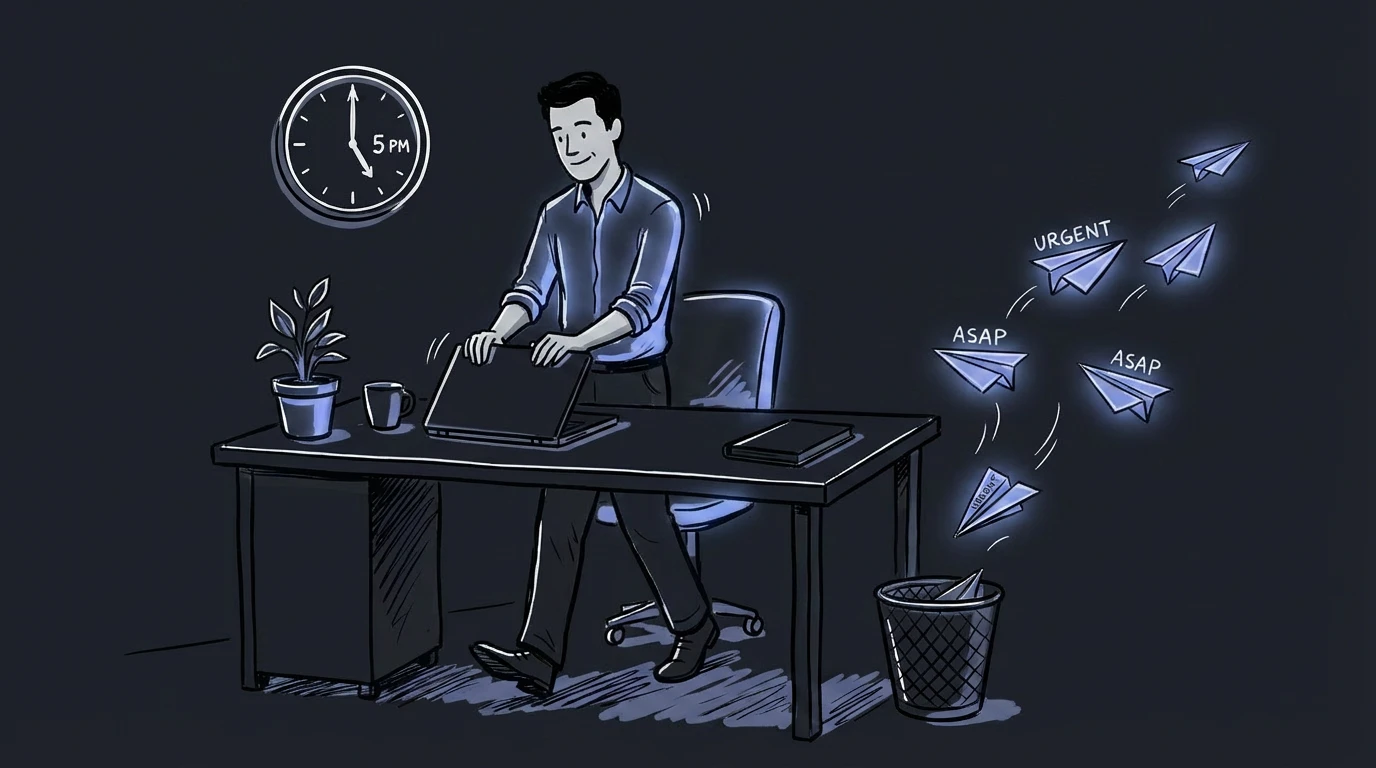
What started as a personal burnout problem has become a company-level question about performance, retention, and leadership. Calm work is no longer a niche idea. It is becoming a credible way to build teams that last.
If you are trying to step off the overwork treadmill, join the Calm Companies newsletter. You will get practical career advice and new openings from employers that value sustainable work, not permanent urgency.
This shift is not anti-growth or anti-ambition. It rejects workplaces where speed matters more than judgment and visible busyness matters more than useful results. The companies moving in this direction are not lowering the bar. They are changing how people clear it.
What Anti Hustle Culture Actually Means
At work, anti hustle culture means refusing to organize everything around long hours, constant urgency, and performative availability. It favors clear priorities, realistic deadlines, recovery time, and output that holds up over months, not just sprints.
That does not mean hard seasons disappear. It means intensity is used on purpose, for a limited time, instead of becoming the default setting for every week of the year. In a calm company, people contribute fully but do not live at work.
- Success is measured by outcomes, not by how late people stay online.
- Managers protect focus by limiting unnecessary meetings and reducing context switching.
- After-hours messages are rare, and true emergencies are defined narrowly.
- Time off is encouraged, planned for, and respected.
- High standards still exist, but the pace is built to last.
The point is not to make work easy or casual. The point is to stop wasting human energy on habits that look intense but produce no better outcomes. Once you see that difference, the appeal of calm work becomes obvious.
Why Anti Hustle Culture Is Gaining Ground
More companies are adopting this model because the old one creates hidden costs that pile up fast. Burned-out teams make worse decisions, turnover rises, and managers spend too much time patching morale instead of building something durable. Even high performers eventually stop trusting a system that treats depletion as normal.
Burnout at Work Got Too Expensive to Ignore
For years, hustle culture survived because its damage was easy to normalize. A tired team can still hit a deadline, which lets leaders pretend the approach works. The real bill shows up later: attrition, disengagement, brittle teams, and work that has to be redone.
That is why burnout is no longer just a private health issue. It is an operating problem. If you are already feeling the impact, our how to recover from burnout guide can help you stabilize while you figure out what needs to change.
The bigger lesson for employers is simple: recovery takes time, and replacement is expensive. Our burnout recovery guide explains what a fuller reset looks like when overwork has been building longer than you realized.
Calm Work Improves Focus, Not Just Morale
Constant urgency feels productive because it keeps everyone in motion. But motion is not the same as progress. Teams produce better work when they can think, finish, and hand off clearly instead of reacting to every notification like it is a fire.
Anti hustle companies tend to simplify the workday. They make fewer things important at once, protect uninterrupted time, and cut status theater that wastes energy without improving results. That creates something hustle culture rarely delivers: consistency.
Work-Life Balance Is Now a Hiring Filter
Job seekers are raising the bar too. People who have survived one or two burnout cycles are not impressed by slogans about passion. They want work that fits a life, which is why interest in the best work-life balance jobs keeps growing.
You can see that demand in the attention going to the best calm tech companies. Candidates are no longer only asking if they can get a role. They are asking what that role will cost them every week.
The same shift shows up in roundups of companies with best work-life balance. People want proof that calmer teams are real, and they use that proof to screen employers before they apply.
Remote and Hybrid Work Exposed Bad Habits
Once work spread across homes, time zones, and asynchronous tools, companies could no longer hide messy norms behind office presence. Teams had to get clearer about response times, meeting discipline, and what truly counted as urgent.
That forced a useful question: if someone does not need to look busy all day to be effective, why was visible busyness ever the standard? Anti hustle culture gained traction because remote and hybrid work made old assumptions easier to challenge.
What Anti Hustle Culture Looks Like in a Calm Company
The phrase can sound abstract until you see it in daily practice. Calm work shows up in decisions, policies, and management habits that lower noise without lowering expectations. A healthy company culture treats these practices as defaults, not perks.
- Job scopes are realistic, and teams are staffed for the work they are actually asked to do.
- Deadlines have reasoning behind them, not just executive preference.
- Meetings have a purpose, an owner, and an end time.
- Communication norms reduce interruptions instead of glorifying instant replies.
- People can log off without writing apology messages.
- Vacation is planned for, not quietly punished.
Clear Priorities Beat Fake Urgency
One mark of a calm company is that leaders choose a few priorities and repeat them often. That sounds basic, but it changes everything. When people know what matters most, they stop spending energy guessing which request will become tomorrow's emergency.
This also makes tradeoffs easier. If a new request comes in, something else can move. Hustle culture treats capacity as infinite. Anti hustle culture treats it as real.
Boundaries Are Normal, Not Negotiable
In a calm workplace, boundaries do not depend on individual courage. People are not rewarded for answering late at night, and they do not have to perform availability to prove commitment. The norm does the protective work that personal willpower often cannot.
That matters because burnout usually builds quietly. It starts with one late evening, then a weekend check-in, then a month where nothing fully stops. When a company normalizes recovery time, it interrupts that slide before it becomes a health problem or a resignation letter.
Communication Gets Calmer
Validate employers before final rounds
Check stability and workload indicators before you accept the offer.
Calm companies write more things down, define response windows, and stop treating every message as synchronous. That reduces the mental drag of constant monitoring and makes deep work easier to protect.
People know when to reply fast and when to finish what they are doing first. Small communication norms create large emotional effects over time. Less noise leaves more room for judgment.
Managers Protect Energy, Not Just Output
Managers decide whether anti hustle culture stays real or turns into branding. The strongest managers notice when workloads expand, when priorities conflict, and when a top performer has shifted from engaged to depleted. They adjust early instead of waiting for someone to break.
They also make calm contagious. When a manager respects time off, writes clearly, and avoids panic language, the team follows. Culture can look abstract from the outside, but inside a company it is mostly repeated behavior.
What Anti Hustle Culture Is Not
Anti hustle culture is not a permission slip for vague goals, weak feedback, or endless consensus. Calm companies still expect strong execution. The difference is that they know quality usually comes from clarity and stamina, not from endless adrenaline.
- It is not low ambition. It is long-term ambition that does not burn people out by default.
- It is not zero urgency. It is selective urgency used when the moment truly calls for it.
- It is not less accountability. It is clearer accountability with fewer mixed signals.
This distinction matters because many leaders hear anti hustle culture and assume lower output. In practice, the best version looks more like disciplined work design. People have room to focus, recover, and stay effective for years, not just quarters.
How to Spot Calm Companies When You Are Job Searching
Not every employer that talks about balance actually practices it. To find the real thing, pay attention to how a company describes work, how the interview process feels, and what people treat as normal.
- Read the job description for urgency language. A few phrases are normal, but a page full of "fast-paced," "wear many hats," and "always on" often signals poor planning or thin staffing.
- Ask how priorities are set when everything cannot happen at once. Calm companies have a process. Chaotic ones say everyone just pitches in.
- Notice how interviews are scheduled and communicated. Repeated reschedules, vague take-home projects, and pressure for instant replies are useful signals.
- Ask about time off, meeting load, and after-hours expectations. The answer matters, but the confidence of the answer matters more.
- Listen for outcomes in how people describe success. Calm teams talk about ownership, decision quality, and collaboration, not just speed.
Questions Worth Asking in Interviews
- How does the team handle competing priorities when deadlines collide?
- What usually causes work to spill past normal hours here?
- How much of the week is spent in meetings versus focused work?
- What does taking time off look like on this team, in practice?
You do not need a perfect employer to improve your situation. You need a team where the default is sustainable and the exceptions are truly exceptional. That alone can change your energy, your health, and the quality of your work.
If you are comparing options, collect evidence instead of settling for vibes. Notice whether recruiters answer simple questions directly, whether managers explain workload honestly, and whether anyone talks about rest as part of doing the job well. Small details reveal the real operating system.
Also look for consistency. If a recruiter promises balance but a hiring manager celebrates weekend heroics, believe the behavior that sounds more expensive. Anti hustle culture is credible when the story stays the same across the whole process.
Why Anti Hustle Culture Will Keep Growing
This shift is still early, but it lines up with how people want to work and how strong companies need to operate. The modern workplace is already full of noise. Organizations that reduce that noise gain an edge in focus, retention, and trust.
There is also a recruiting advantage. When candidates have choices, calm becomes a differentiator. Employers that offer ambition without chaos, and accountability without constant intrusion, keep winning people who know their energy is limited and valuable.
That is why anti hustle culture is bigger than a trend phrase. It is a correction. Work will not feel easy every day, but it can feel human, deliberate, and possible to sustain.
If that is the kind of career you want, join the Calm Companies newsletter. We share new openings, thoughtful company shortlists, and practical advice to help you move toward calm work without guessing.
Frequently Asked Questions
What does anti hustle culture mean at work?
Anti hustle culture is a way of working that rejects constant urgency, long hours, and performative busyness. It replaces them with clear priorities, healthier boundaries, and expectations people can sustain over time.
Does anti hustle culture mean low ambition?
No. The goal is not to do less for its own sake. The goal is to do meaningful work at a pace that protects judgment, health, and long-term performance.
Why are companies rejecting hustle culture?
Because the costs are harder to ignore. Burnout, turnover, weak focus, and constant rework make hustle culture expensive even when it looks productive in the short term.
How do you know if a company values calm work?
Look for realistic job scopes, clear answers about priorities, respectful scheduling, and honest discussion of time off and after-hours expectations. In calm companies, balance sounds normal, not defensive.
Can you be high-performing without hustle culture?
Yes. High performance usually improves when people have clarity, focus, and enough recovery to think well. Calm work is not the opposite of excellence. It is often the condition that makes excellence repeatable.
Get calm-company opportunities every week
Use the directory and subscribe so you can move fast when better roles open.