What to Do With Your 401k After a Layoff
A layoff does not mean you need to rush your retirement money. Here is how to compare leaving your 401k in place, rolling it over, or cashing out without making an expensive mistake.
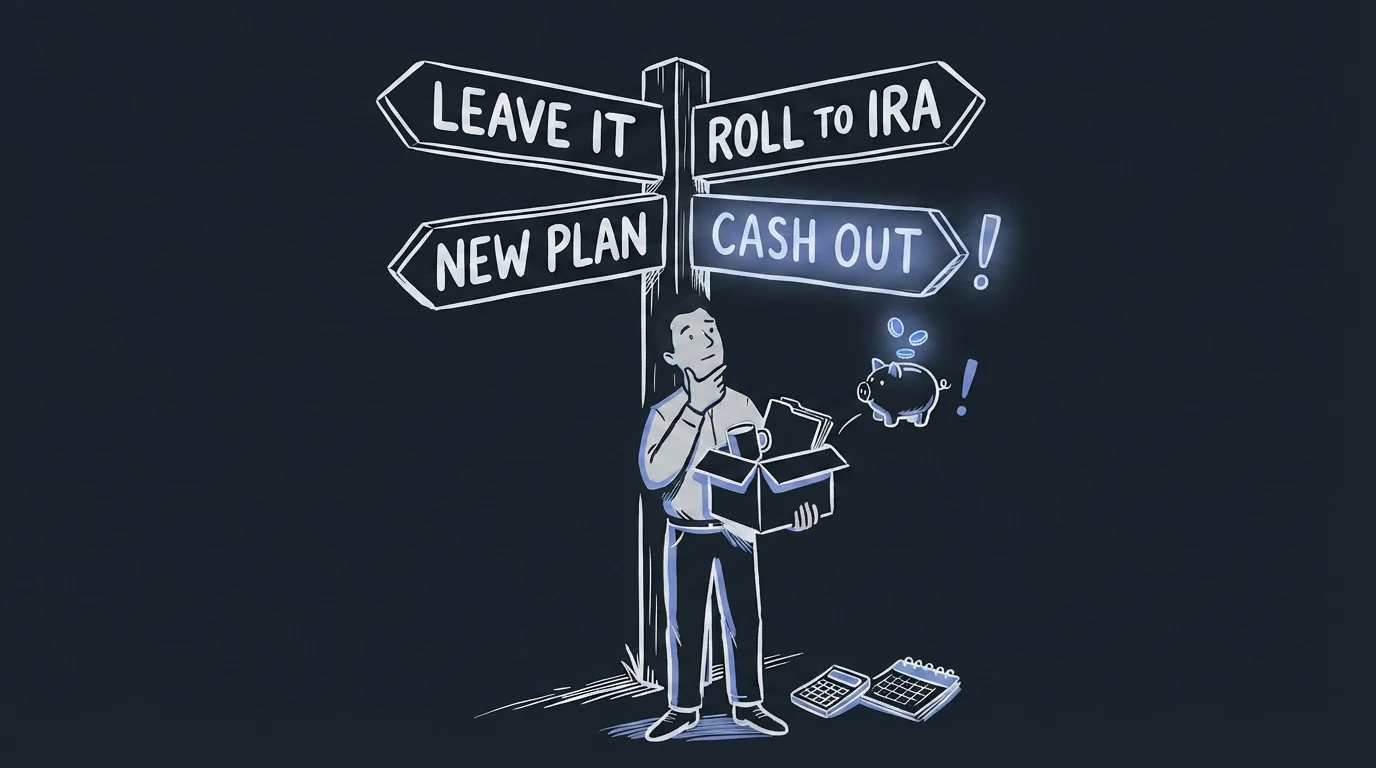
Your 401k after a layoff does not need an immediate decision, but it does need the right one. The best move depends on your plan rules, fees, next job timeline, and cash needs. You have four paths: leave the money where it is, roll it into an IRA, transfer it to a new employer plan, or cash it out. Before you choose, confirm your vested balance and check whether you still carry a 401k loan.
If the layoff is fresh, sign up for the Calm Companies newsletter for practical recovery tips and calm-company job openings while you sort out benefits. Our getting laid off guide covers how to triage the first decisions without spiraling.
Use the layoff recovery checklist to organize deadlines, paperwork, and cash flow in your first month. If you are still clarifying the separation itself, getting laid off vs fired explains why the label matters for benefits and timing.
If you are still employed but worried, watch for signs of a layoff and save your account statements, beneficiary details, and plan contacts before access changes. That simple prep makes your 401k decision much easier later.
Your Options for a 401k After a Layoff
A layoff does not automatically move your retirement money. Your account stays invested until you tell the plan administrator otherwise, unless the plan forces small balances out after separation.
- Leave it in your former employer plan if the fees are reasonable and the plan allows it.
- Roll it into an IRA if you want broader investment choice and more control.
- Move it into a new employer plan if you want all workplace retirement money in one place.
- Cash it out only if you fully understand the taxes, penalties, and long-term cost.
Option 1: Leave Your 401k With Your Former Employer
This is often the simplest short-term move. If the plan offers solid funds and reasonable fees, doing nothing for a few months buys you time during a job search and prevents a rushed rollover.
The downside: old accounts are easy to forget, and some plans cost more than they appear. You may also face tighter rules around distributions, online access, or account minimums once you are no longer an active employee.
Option 2: Roll Your 401k Into an IRA
An IRA usually gives you more investment choices and makes it easier to consolidate old workplace plans. It fits well if you want one account you fully control, especially during a longer gap between jobs.
If you choose this route, use a direct rollover. The money goes straight from your old plan to the IRA provider, which avoids unnecessary tax withholding and paperwork mistakes.
Option 3: Move Your 401k Into a New Employer Plan
If you land a new job soon, rolling your old balance into the new company plan keeps everything under one roof. This simplifies rebalancing, beneficiary updates, and recordkeeping.
Check the new plan before you transfer anything. Compare fees, investment options, service quality, and whether the plan accepts incoming rollovers at all.
Option 4: Cash Out Your 401k After a Layoff (Last Resort)
Cashing out feels tempting when income drops, but it is usually the most expensive choice. You may owe income taxes and early withdrawal penalties, and you permanently lose future tax-advantaged growth on every dollar you withdraw.
If money is tight, exhaust every other source of cash first: severance, unemployment benefits, emergency savings, and a stricter short-term budget. Retirement money should be the backstop, not the first resource you tap.
How to Decide What to Do With Your 401k After a Layoff
- Check what portion of the balance is vested, especially if your employer made matching or profit-sharing contributions.
- Review the old plan's fees, investment lineup, and service quality before you move anything.
- See whether a new employer plan accepts rollovers and whether its options are actually better.
- If you carry a 401k loan, ask the plan administrator what changes now that your employment ended.
- Choose a direct rollover if you move the money, so the transfer goes straight between providers.
- Keep statements, transfer confirmations, and tax forms in one folder for next year's filing.
Start With Your Vested Balance
Your own salary deferrals are always yours. Employer contributions can follow a vesting schedule, so part of the headline balance may not actually belong to you once employment ends.
Pay Attention to Any 401k Loan
Validate employers before final rounds
Check stability and workload indicators before you accept the offer.
A layoff can change the repayment timeline on a 401k loan. Contact the plan administrator early. Missing the post-employment rules can turn the unpaid balance into a taxable distribution.
Use Direct Rollovers, Not Indirect Ones
If you decide to move the account, direct rollovers are cleaner and safer. The money goes straight to the new custodian, which lowers the risk of withholding issues or missed deadlines.
Common Mistakes to Avoid
- Moving money before comparing fees and fund quality at both plans.
- Forgetting to download statements and beneficiary information before you lose portal access.
- Cashing out to solve a short-term problem with long-term money.
- Ignoring outstanding 401k loans or vesting rules until it is too late.
- Letting multiple old accounts scatter across former employers for years.
What Happens to a 401k if You Get Laid Off?
The money stays in your name and remains invested based on your current elections until you move it or the plan requires a small-balance transfer. A layoff does not erase the account, but it can change online access, loan rules, and the timing of plan communications.
Protect Your 401k While You Plan Your Next Step
The best move for your 401k after a layoff is the one that protects your long-term savings and fits your timeline. If you need breathing room, leaving the account alone for a short period or using a direct rollover is almost always smarter than cashing out.
While you handle the financial paperwork, sign up for the Calm Companies newsletter for calm-company job openings and practical layoff recovery advice. It is a low-effort way to keep your search moving without making rushed money decisions.
FAQs About a 401k After a Layoff
What happens to my 401k if I get laid off?
It stays in your name and remains invested until you leave it where it is, roll it over, or cash it out. The main things that change are plan access, loan rules, and whether the plan lets you keep the account if the balance is small.
Can I keep my 401k with my old employer after a layoff?
Usually yes, if the plan allows it and your balance meets the plan's minimum. This can be a smart temporary move if you need time to compare fees and you do not have a new employer plan yet.
Is it better to roll a 401k into an IRA after a layoff?
It can be, especially if you want more investment choices and direct control. Compare the IRA's fees and investment menu against your old plan before transferring any money.
Should I cash out my 401k after losing my job?
Usually no. Cashing out can trigger income taxes, possible penalties, and a permanent loss of retirement growth. Treat it as the last option after you have exhausted severance, savings, and unemployment benefits.
What happens to a 401k loan after a layoff?
It depends on the plan. Contact the administrator right away. Repayment terms often change after employment ends, and missing the rules can turn the unpaid balance into a taxable distribution.
How long do I have to move my 401k after a layoff?
There is usually no rush to move it immediately, but your plan may have rules for small balances or outstanding loans. Learn the plan deadlines first, then use a direct rollover if you decide to transfer the account.
Get calm-company opportunities every week
Use the directory and subscribe so you can move fast when better roles open.