Getting Laid Off vs Fired: Key Differences That Affect Your Benefits
Getting laid off vs fired changes what happens to severance, unemployment, references, and your next move. Use this guide to protect benefits and plan calmly.

When you compare getting laid off vs fired, the question is rarely emotional first. It is practical. You want to know what happens to unemployment, severance, health coverage, references, and the explanation you will give in interviews. The label your employer chooses changes the answer to all five of those questions, which is why understanding it early protects money, benefits, and momentum instead of reacting from panic.
A layoff means the company ended your role for business reasons: restructuring, budget cuts, or position elimination. Being fired means the employer tied the separation to performance, conduct, attendance, or fit. Being terminated is an umbrella term that covers both, plus everything in between, which is why the word "terminated" creates the most confusion. This guide explains what each label actually means, how unemployment, severance, and your legal rights differ, and how to talk about any of them in your next interview without overexplaining.
Laid off vs fired vs terminated: the short answer
Getting laid off usually means the company is cutting the role. Being fired usually means the company believes the problem was attached to the employee. Being terminated means your employment ended, full stop, and the word does not by itself tell you which of those two situations you are in.
If you hear "terminated," ask for the official separation reason in writing. The exact phrasing on your separation letter, your final paycheck stub, and your employment record is what determines how the state unemployment office, your future employers, and your reference checks treat the event. Do not guess at the reason. Get it in writing before you sign anything.
That documented reason affects how easy it is to claim unemployment, whether severance is likely, and how you should frame the separation in your next search. It also changes what you should ask HR before you leave: your separation letter, your final pay timing, your benefits end date, and any severance or release agreement.
What does "terminated" actually mean?
"Terminated" is the formal HR and legal word for "your employment is over." It is the term most often used on separation paperwork, employment verifications, and unemployment forms, which is why it shows up in your inbox far more often than "fired" or "laid off." On its own, it tells you almost nothing about why.
The useful split is between two flavors of termination:
- Termination for cause means the employer believes you did something that justified ending the relationship. This is what most people call being fired. Common cited reasons are policy violations, repeated performance problems, attendance issues, or misconduct.
- Termination without cause means the employer ended the relationship for reasons not attached to your behavior. This includes layoffs, role eliminations, restructures, and most "we're going in a different direction" exits. Without cause does not mean without reason; it means the reason is not your fault.
This distinction matters because most state unemployment systems, severance policies, and rehire-eligibility decisions treat for-cause and without-cause terminations differently. If your separation letter just says "terminated" with no qualifier, ask HR which category your exit falls under and request that the answer be put in writing.
Side-by-side: laid off vs fired
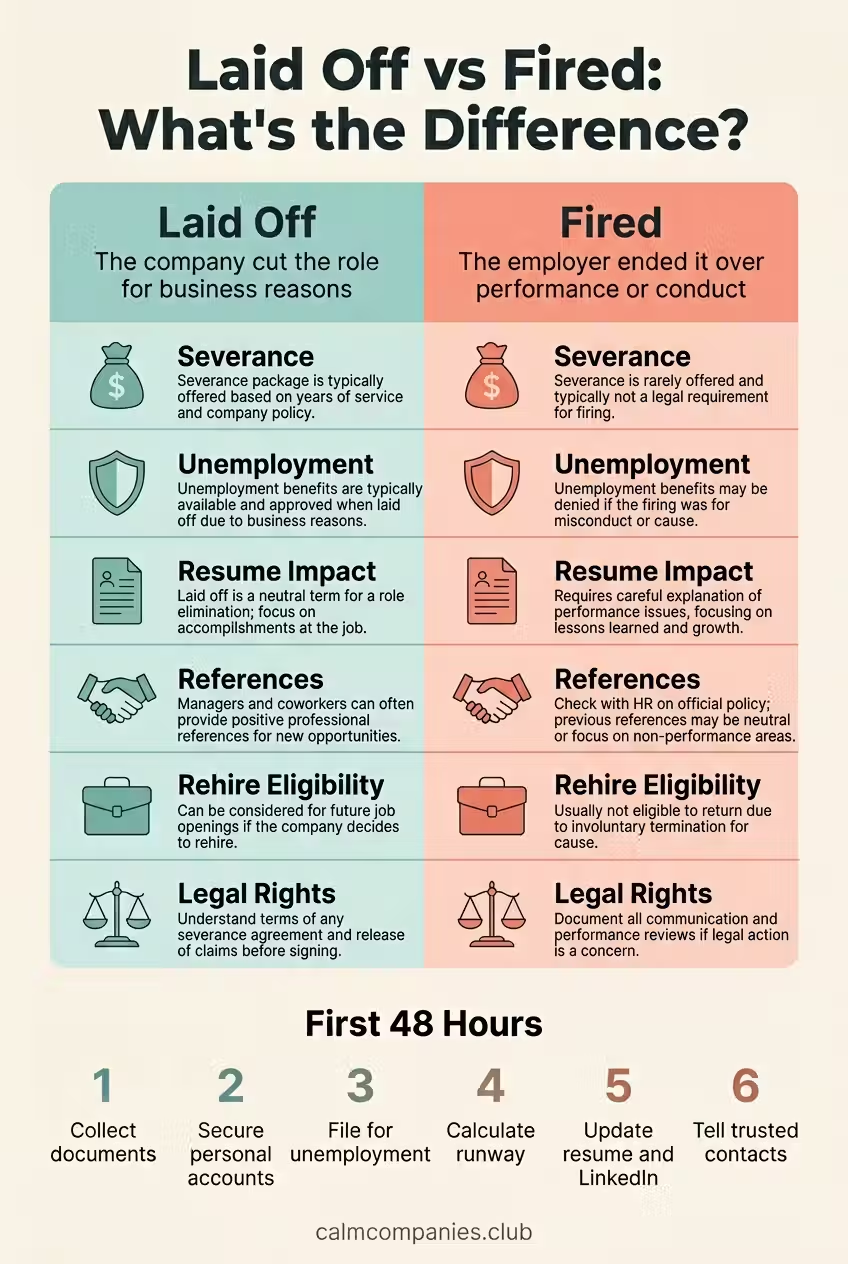
The image above summarizes the six dimensions where the two situations diverge most. The sections below expand each one in detail.
How severance works when you are laid off vs fired
Severance after a layoff is common, especially in force reductions, but not legally required. There is no federal law that mandates severance pay in the United States. Severance is governed by employer policy, employment contract, or a separation agreement that the employer asks you to sign in exchange for the payment.
In practice, laid-off employees more often see a defined severance formula because the company is ending roles in bulk, wants a clean transition, or wants signed releases of legal claims. A typical formula is one or two weeks of pay per year of service, with a minimum and a cap.
If you were fired, severance is less common, but it is not impossible. Some employers still offer it when the exit is a no-fault mismatch, when they want a release of claims to protect against a wrongful termination suit, or when they standardize exits across levels. If severance is on the table, do not sign on the spot. Review the document carefully for non-compete, non-disparagement, repayment-on-rehire, equity acceleration, bonus eligibility, and COBRA support language.
The bottom line: getting laid off vs fired does not guarantee severance either way. Layoffs simply trigger a structured severance conversation more often.
Can you get unemployment if you were fired?
Laid-off workers usually have a cleaner path to unemployment because no misconduct is alleged. The company ended the role for business reasons, and state systems are designed to support workers in exactly that situation.
If you were fired, eligibility depends on state rules and on what the employer says about the reason. Most states disqualify applicants for misconduct, which usually means willful violation of a known company policy. But not every firing is treated as misconduct. Poor fit, missed targets, isolated performance problems, or general "underperformance" are often evaluated separately from theft, harassment, or repeated written-warning policy violations.
Three things matter most:
- Apply quickly. Most states have a one-week waiting period and require you to file before you start receiving payments. Do not wait to see what the employer says first.
- Save your paperwork. Keep the separation letter, any performance documentation, written warnings, and copies of messages about the exit. If the state asks for documentation, you want it in one place.
- Respond carefully to any disputes. If the employer contests your claim, you usually have a right to a hearing. Stick to facts and dates, not feelings about the manager.
If your situation started as uncertainty rather than a formal notice, our signs of a layoff guide walks through the patterns to document early so you do not lose time once the separation becomes official.
Health insurance, COBRA, and final pay
The practical checklist is similar in both situations:
- Confirm when employer health coverage ends (often the last day of the month, but verify).
- Decide whether to elect COBRA, switch to a spouse's plan, or buy a marketplace plan. COBRA lets you keep your existing coverage for up to 18 months, but you usually pay the full premium plus a 2% admin fee, which can be expensive.
- Check when your final paycheck arrives. Several states require immediate payment on the last day for involuntary terminations; others allow up to the next regular payday.
- Confirm whether unused PTO is paid out. About half of US states require it; the rest leave it to company policy.
- Confirm whether earned commissions, bonuses, or RSU vesting events are still owed.
- Confirm equipment return instructions and timing.
Layoffs are more likely to come with transition support: severance, paid notice periods, outplacement services, or extended benefits. Firings are more likely to be immediate, with the employer asking you to leave the same day. Even in a same-day firing, you can still ask for benefit end dates, payout timing, and the exact wording the employer will use when verifying employment to future employers.
References, background checks, and rehire eligibility
People obsess over getting laid off vs fired because they fear a permanent record. The reality is more boring than the fear. Most future employers only verify dates of employment and job title. Some confirm eligibility for rehire as a yes/no question. Fewer give detailed performance commentary, especially when the legal risk of a defamation claim outweighs the benefit of being honest about a former employee.
Three things to check before you leave:
- What HR will confirm. Ask, in writing, what the company shares in employment verifications. Many companies have a one-line policy: dates and title only.
- Whether you are eligible for rehire. This is a recorded yes/no for most large employers. Layoffs almost always leave you eligible; for-cause terminations almost always do not.
- Whether your manager will serve as a personal reference. Even when the company keeps formal responses minimal, a supportive manager can give a personal reference outside the company's official channel. Ask before you leave; this is much harder to negotiate later.
A layoff is easier to explain in interviews. A firing is rarely fatal if you can describe what happened clearly, what you learned, and why the next environment is a better fit.
Validate employers before final rounds
Check stability and workload indicators before you accept the offer.
Legal rights, at-will employment, and the Montana exception
Forty-nine US states are at-will employment states, which means an employer can end your employment for any legal reason or no reason at all, as long as the reason is not unlawful (discrimination, retaliation for protected activity, or violation of a contract). Montana is the one exception: after a probation period, Montana law requires "good cause" for termination, which gives Montana employees stronger wrongful termination protections than the rest of the country.
Layoffs of 50 or more employees at a single site are also covered by the federal WARN Act, which requires 60 calendar days of advance written notice. Smaller layoffs, individual firings, and reductions below the WARN threshold are not covered. Several states (California, New York, New Jersey, Illinois) have their own mini-WARN laws with lower thresholds, so check your state if you were part of a larger reduction.
If you were terminated and suspect the real reason was discrimination, retaliation, or a contract breach, document everything you remember about timing, conversations, and decisions. The Equal Employment Opportunity Commission (EEOC) has strict deadlines (usually 180 or 300 days, depending on the state) for filing a charge, so do not wait long if you plan to talk to an employment lawyer.
This guide is not legal advice. If your separation involves possible discrimination, retaliation, harassment, an unsigned non-compete, or a release agreement asking you to waive significant rights, talk to an employment attorney before signing anything. Many offer free consultations.
How to explain getting laid off or fired in interviews
If you were laid off, keep the explanation short and factual: the company restructured, the team was reduced, or the role was eliminated. Then move immediately to what you are targeting next. A complete answer is two sentences long. Anything longer signals you still feel responsible for the event, which is the opposite of the impression you want.
If you need a fuller reset plan, our getting laid off guide walks through the first-week actions to rebuild your search pipeline before you over-explain the event.
If you were fired, do not invent a layoff story. Say what happened in neutral language, take responsibility for your part where appropriate, and show the correction. A strong answer sounds like this:
"The role exposed a mismatch in expectations. I learned where my process broke down, I fixed that pattern, and I am now targeting environments with clearer goals and stronger management systems."
The goal is not to win sympathy. It is to show accuracy, judgment, and forward motion in under 30 seconds. Most interviewers stop probing once you have shown all three.
First 48 hours: a six-step playbook
The biggest mistake after either outcome is drifting through the first week without a system. You do not need a perfect plan on day one, but you do need a sequence. Work the six steps below in order; they are designed to protect money first, then access, then narrative.
- Collect documents. Separation letter, last three pay stubs, offer letter, equity paperwork, performance reviews, and benefits summary. Save everything to a personal folder before company access expires.
- Secure personal accounts. Move personal contacts off your work device, save copies of any portfolio or work samples you are allowed to keep, and confirm what you must return.
- File for unemployment. Do this whether or not you think you qualify. The waiting period and the first-week certification rules in most states reward filing immediately; you can always withdraw later.
- Calculate runway. Take your liquid savings, divide by your monthly burn, and write the number down. Aggressive job searches and selective ones look very different. Knowing your number lets you make that choice deliberately rather than under panic.
- Update your resume and LinkedIn headline. Past tense for the role that just ended, current accomplishments at the top, and a one-line headline that signals what you are looking for next. Skip the "open to work" green ring if you want to stay quiet about the search at first.
- Tell trusted contacts. Send a short, neutral message to ten to twenty people in your network within the first 72 hours. The longer you wait, the harder the conversation becomes, and the less help your network can offer.
If the separation was a layoff, our layoff recovery checklist gives you a calmer week-by-week plan for finances, outreach, and search structure.
Should you say you were laid off if you were actually fired?
No. Calling a firing a layoff creates a bigger trust problem later if a reference, recruiter back-channel, or HR verification contradicts your story. Most large companies have a written policy of confirming "eligible for rehire," and a "no" answer to that question on a verification call signals to the next employer that the original separation was not a layoff.
The safer strategy is to describe the separation plainly and spend the rest of the answer on what changed in your process and what environment you are seeking now. You do not need to volunteer every painful detail; you need to stay truthful about the basic shape of the event.
Frequently asked questions
Is being laid off the same as terminated?
No, but the words overlap. "Terminated" is an umbrella term that covers any end of employment, including layoffs, firings, and contract endings. A layoff is a specific kind of termination where the role was ended for business reasons rather than employee performance. If your separation paperwork says "terminated" without specifying for-cause or without-cause, ask HR which category applies.
Is it better to say laid off or terminated?
If you were genuinely laid off, say "laid off." It is the most accurate term and signals to interviewers that the separation was business-driven, not behavior-driven. Say "terminated" only when describing the literal end of the role on official paperwork, or when the official reason has not been clarified yet. Avoid using "terminated" as a softener for a firing; the word does not actually soften it, and most interviewers will ask for more detail.
Did I get fired or laid off?
Look at three things. First, the language on your separation letter (does it cite a business reason or a performance reason?). Second, your eligibility for rehire (yes for layoffs in most cases, no for for-cause firings). Third, whether the employer is offering severance contingent on signing a release. If two or three of those point to "business reason," you were laid off. If they point to performance, conduct, or policy violation, you were fired. If you cannot tell, ask HR for the answer in writing.
Is termination without cause the same as being laid off?
Functionally, yes, in most situations. Termination without cause means the employer ended the relationship for reasons not tied to your behavior, which is the same standard as a layoff. Layoffs are usually termination without cause, just at scale and with a specific business justification (restructure, role elimination). If your separation letter says "without cause," you have most of the unemployment and reference advantages of a layoff.
Does being fired always disqualify you from unemployment?
No. State rules vary, and not every firing is treated as misconduct. Poor fit, missed targets, or ordinary performance issues are often handled differently from theft, harassment, or repeated written-warning policy violations. File anyway, file fast, and respond carefully to any requests for documentation.
Does being fired show up on a background check?
Not in the dramatic way most people fear. Standard background checks focus on identity verification, criminal records where relevant, and employment history. The "fired" label rarely appears on its own. What matters more is what the former employer is willing to confirm in a verification call, and whether your interview story matches what they say.
Can you still negotiate after being fired or laid off?
Yes, sometimes. You can ask about severance amount, payout timing, COBRA support, equity treatment, and the exact wording the employer will use when verifying employment. You may not always get changes, but asking thoughtful questions before signing anything is normal and often worthwhile, especially when the employer wants a quick, signed resolution.
If you want a steadier pipeline while you recover, subscribe here for weekly Calm Companies openings from teams with healthier pacing and better management systems.
Get calm-company opportunities every week
Use the directory and subscribe so you can move fast when better roles open.