Quiet Quitting vs Burnout: How to Tell the Difference
Quiet quitting and burnout can look identical from the outside, but the causes and fixes differ. This guide breaks down the real distinction, the overlap, and what to do when work stress has gone too far.
Quiet Quitting vs Burnout: How to Tell the Difference
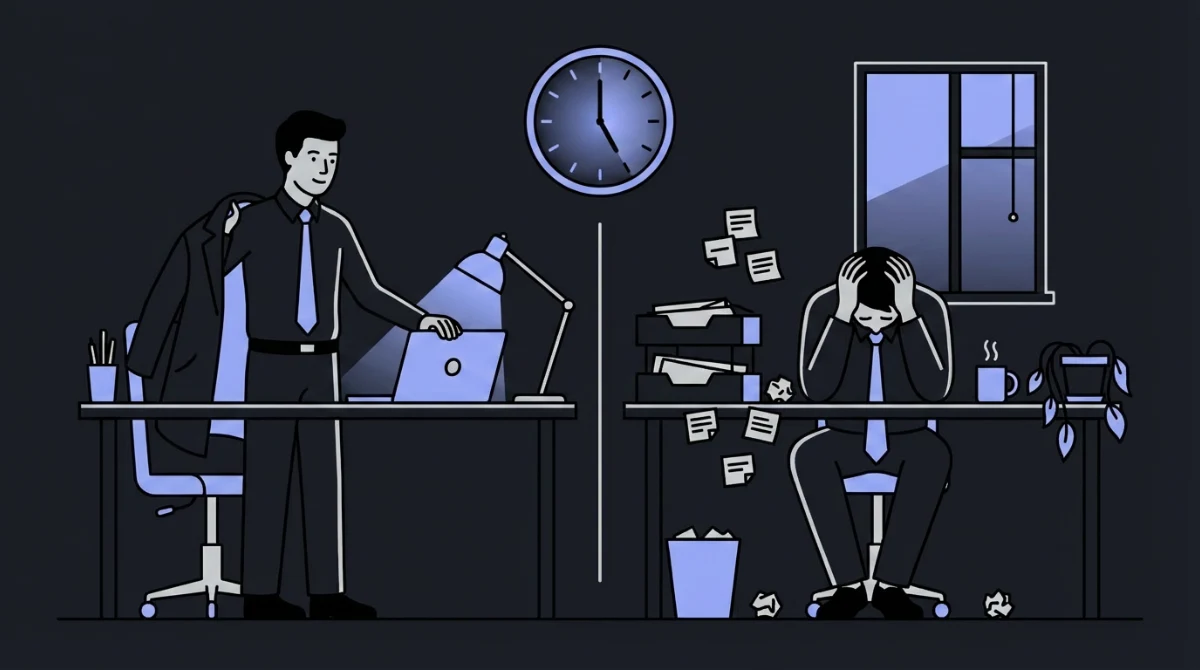
Quiet quitting vs burnout can be hard to separate when you are tired, checked out, and doing the minimum just to survive the week. Quiet quitting is usually a deliberate shift in effort and boundaries. Burnout is a state of chronic depletion that affects your energy, mood, and ability to function.
If your job feels harder to name than to handle, sign up for the Calm Companies newsletter. You will get practical guidance on burnout, boundaries, and healthier work without the usual career noise.
Quiet quitting vs burnout: what is the actual difference?
Quiet quitting does not mean literally quitting. It usually means stopping unpaid emotional labor, declining unnecessary stretch work, and doing the job you were hired to do.
Burnout is different. It shows up as persistent exhaustion, irritability, cynicism, brain fog, and a sense that even basic tasks cost too much. You are not just less willing to give extra. You may feel unable to give anything at all.
- Quiet quitting is often a deliberate response or strategy; burnout is a stress-related state of depletion.
- Quiet quitting can coexist with decent health. Burnout usually spills into sleep, mood, and life outside work.
- Quiet quitting may improve things if stronger boundaries help. Burnout usually requires recovery plus structural changes at work.
Burnout vs disengagement: why the two get confused
From the outside, both look like low motivation. A burned-out employee may stop volunteering, lose the spark they used to have, or pull back from nonessential work. Someone who is quiet quitting may do the same things on purpose.
The confusion deepens in jobs where people feel overworked and underpaid. When effort keeps rising and support, pay, or recognition do not, self-protection can look like disengagement even when the real issue is strain.
Quiet quitting symptoms to watch for
Quiet quitting symptoms are usually behavioral before they are physical. You stop going above and beyond, keep firmer hours, skip optional work, and guard your attention more carefully.
- You still have energy for life outside work, even if you feel less invested in your job.
- You can meet core expectations, but you do not want to take on extra tasks without clear reward or purpose.
- Your pullback feels intentional, not like your body or mind is shutting down.
- Rest, time off, or a better manager would probably improve your outlook.
Signs of burnout at work
Signs of burnout at work go beyond a bad week. Common overworked symptoms include constant fatigue, trouble concentrating, dread before the workday starts, and feeling emotionally numb or unusually reactive.
Burnout also lingers. A weekend does not fix it. Vacation helps less than it used to, and even simple tasks feel strangely hard.
- You feel tired before the day begins.
- You are more cynical, detached, or hopeless than usual.
- You make mistakes, forget details, or struggle to focus.
- You are getting headaches, sleep problems, or other stress-related symptoms.
- Work stress follows you home and affects your relationships or health.
Can quiet quitting turn into burnout?
Yes, sometimes. What looks like quiet quitting can be the stage right before burnout, especially if you are pulling back because you have already hit your limit. In that case, reduced effort is not the problem. It is a warning sign.
The reverse is also true. Healthy boundary setting can prevent burnout. If you stop overfunctioning early enough, you may avoid the crash entirely.
Ask yourself these questions:
Validate employers before final rounds
Check stability and workload indicators before you accept the offer.
- When you rest, does your energy come back?
- Are you choosing not to do extra work, or are you unable to do it?
- Is your frustration mostly about fairness and boundaries, or is it affecting your sleep, mood, and focus?
- Do you still feel like yourself outside work?
How to recover from burnout at work
If burnout sounds closer to your experience, start with the basics in our guide on how to recover from burnout. Recovery usually begins with reducing demands, getting real rest, and naming the conditions that caused the overload.
Then go deeper with the full burnout recovery guide. Burnout rarely resolves through mindset alone. Most people need both personal recovery and structural changes: workload adjustments, clearer expectations, time off, or a move to a healthier employer.
- Audit what drains you most: workload, staffing, urgency, conflict, or lack of control.
- Talk to your manager in concrete terms. Ask for fewer priorities, clearer deadlines, or support on specific tasks.
- Use available sick time, PTO, or mental health support if you have it.
- If the environment will not change, start planning an exit before your health pays the price.
What to do if it is quiet quitting, not burnout
If this is quiet quitting rather than burnout, the question goes beyond how you feel. Does your current job still deserve your best energy? Pulling back may be a reasonable response to unclear expectations, poor incentives, or a culture that rewards overwork.
Be honest about what you want next. Some people need a better conversation with their manager. Others need a different role, a different company, or a clearer set of boundaries they can actually keep.
The bottom line on quiet quitting vs burnout
Quiet quitting vs burnout is really a question of capacity versus choice. Quiet quitting is often an intentional limit on extra effort. Burnout is what happens when stress outpaces recovery for too long.
If you are not sure which one you are dealing with, start by taking your symptoms seriously. If your body, mood, sleep, and focus are all suffering, treat it like burnout. If your main shift is around boundaries and unpaid effort, you may be looking at a justified form of disengagement instead.
Want practical guidance on work that does not drain your life? Join the Calm Companies newsletter for honest advice on burnout, better boundaries, and finding calmer jobs.
Frequently asked questions
Is quiet quitting a sign of burnout?
Sometimes, but not always. Quiet quitting can be a deliberate boundary choice, while burnout involves deeper exhaustion and reduced functioning. The key question is whether you are choosing to do less or struggling to do even basic work.
What is the difference between burnout and disengagement?
Disengagement usually means lower emotional investment in your work. Burnout includes exhaustion, cynicism, and reduced effectiveness caused by prolonged stress. You can be disengaged without being burned out, but burnout often creates disengagement.
Can setting boundaries at work look like quiet quitting?
Yes. Saying no to unpaid extra work, protecting your hours, and sticking to your role can look like quiet quitting from the outside. That does not make it unhealthy or unprofessional.
How do I know if I need rest or a new job?
Start with rest and symptom tracking. If time off helps and the job becomes manageable with better boundaries, recovery may be enough. If symptoms return quickly or the workplace refuses to change, a new job may be the healthier answer.
Get calm-company opportunities every week
Use the directory and subscribe so you can move fast when better roles open.